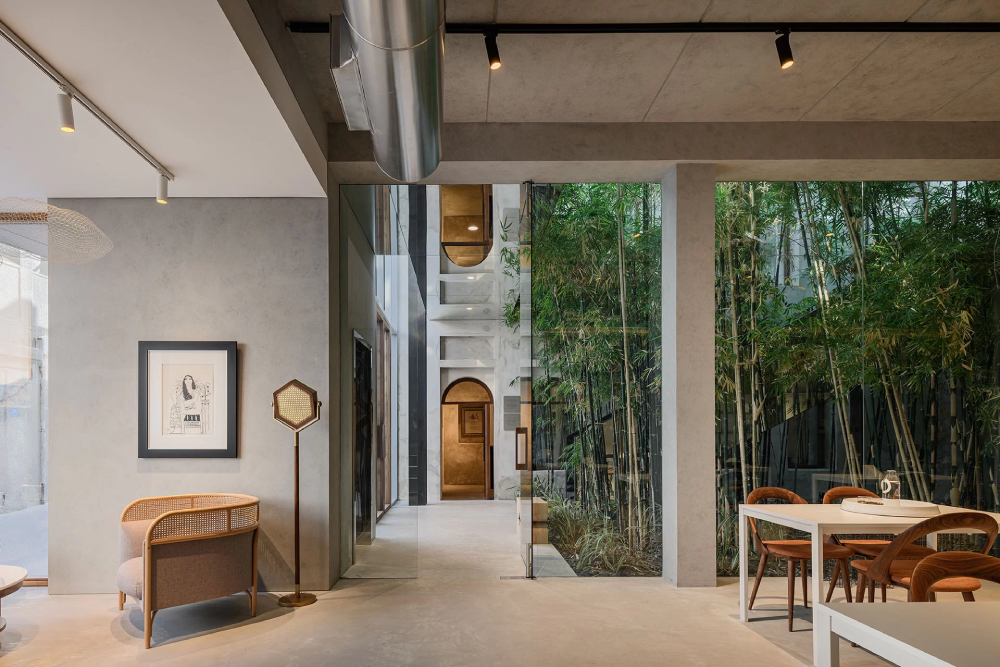

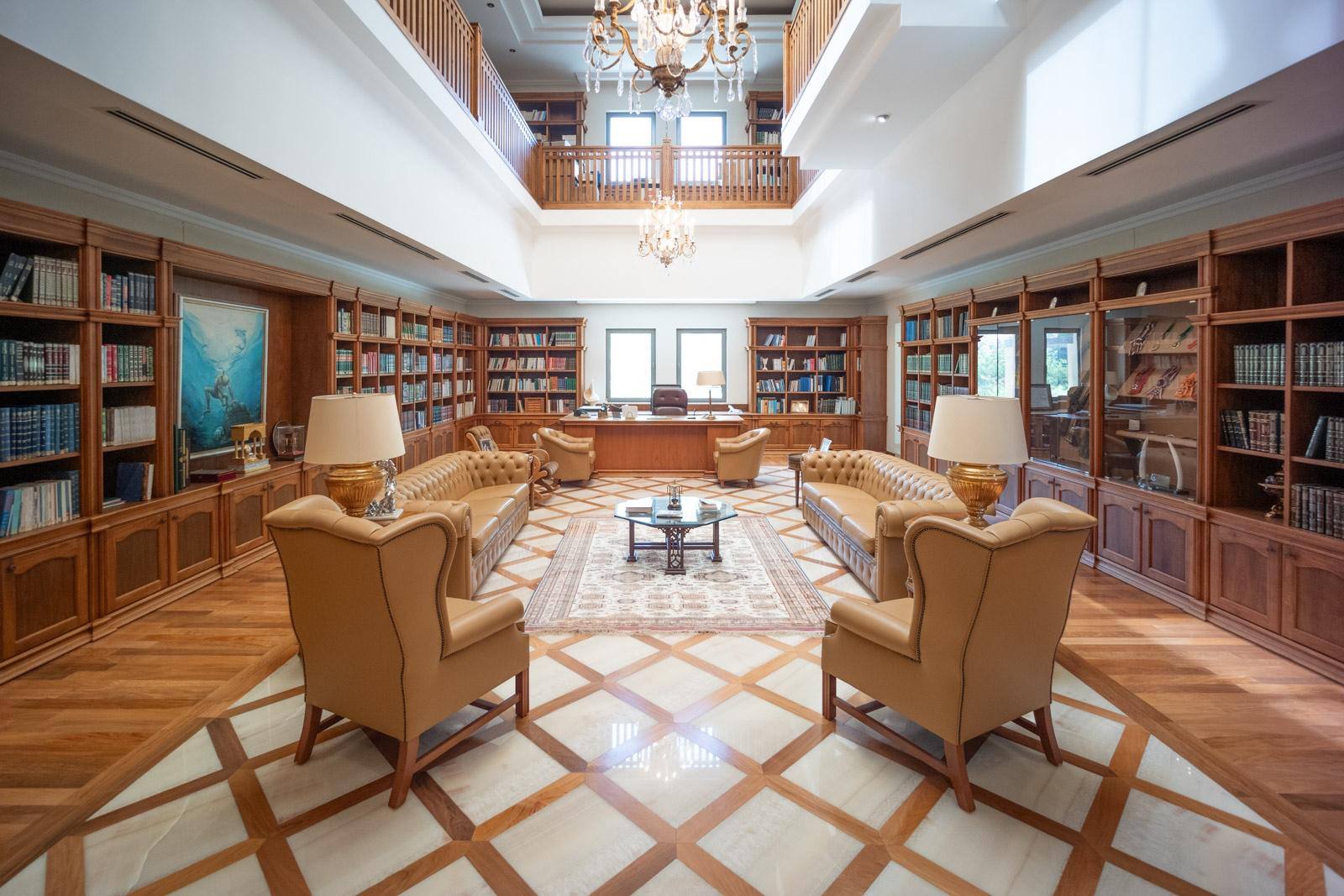
The Ghazi Algosaibi Chair for Development and Cultural Studies at the Al Yamamah University is a great example of his legacy in action. The program aims to promote cultural studies and also rewards outstanding contributions in the fields of literature, civil service, and charitable initiatives with the Ghazi Algosaibi Prize.
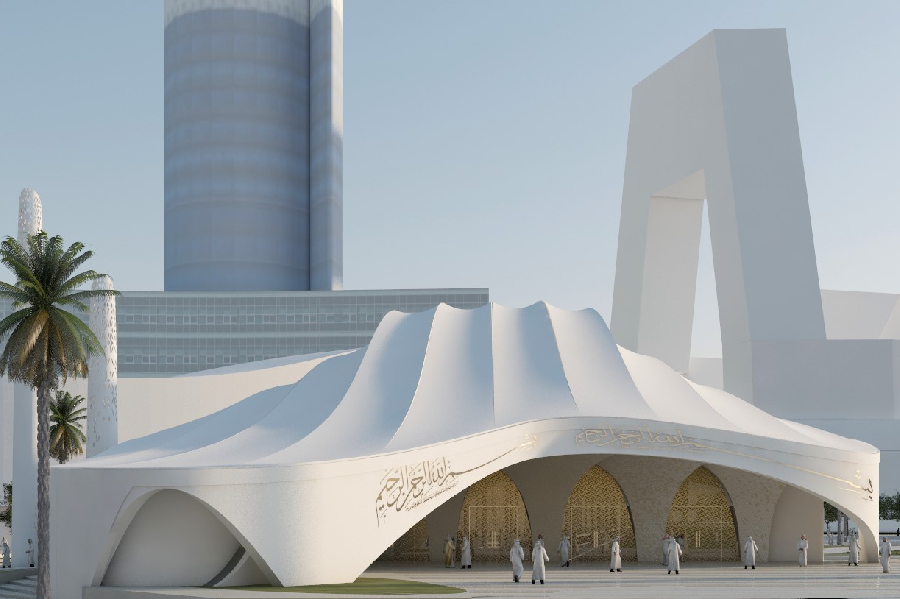 The Ghazi Algosaibi Mosque in Jubail was built by the Saudi Arabia Basic Industries Corporation (SABIC). The mosque provides a space for worshippers and honours Algosaibi’s vital role in the formation of one of the world’s largest companies.
In the heart of Bahrain’s capital, The “Manamat Algosaibi” house stands as a testament to the impact he had in the Kingdom of Bahrain. Having spent his childhood there, and later served as Saudi Ambassador to the Kingdom, the people of Bahrain consider him one of their own. Manamat Algosaibi once belonged to his father, Abdulrahman Algosaibi, and has been refurbished by the Bahrain Authority for Culture and Antiquities. It offers a space for intellectual exchange and cultural enrichment.
Through these endeavors, Algosaibi’s dedication to societal progress and empowerment continues to inspire and uplift communities, ensuring that his legacy remains vibrant and influential.
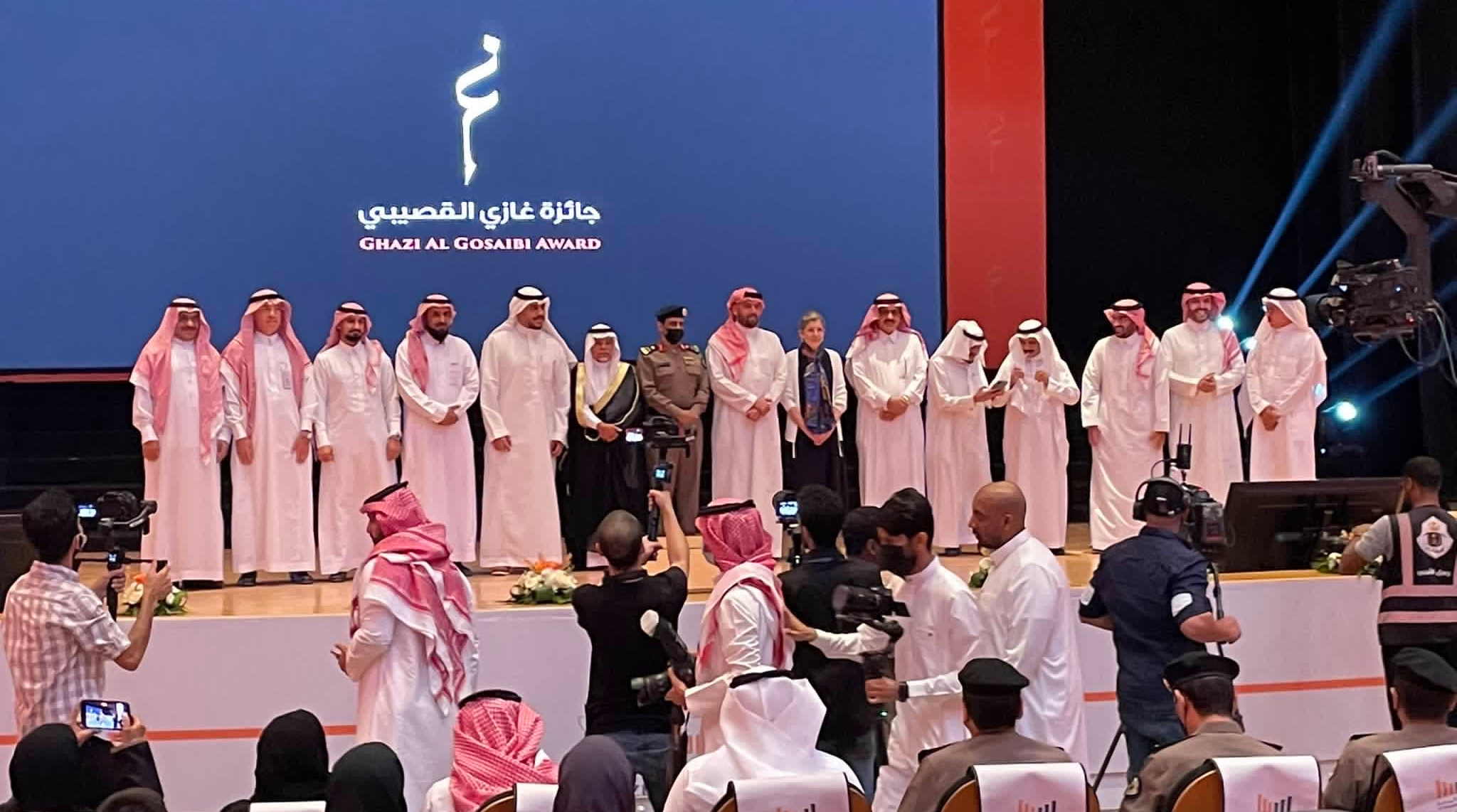
Institutions Honoring Ghazi Algosaibi’s Legacy
The Ghazi Algosaibi Chair for Development and Cultural Studies at Al Yamamah University stands as a powerful example of his enduring influence. This academic initiative promotes cultural studies and recognizes excellence in literature, civil service, and charitable work through the Ghazi Algosaibi Prize.
In Jubail, the Ghazi Algosaibi Mosque, built by the Saudi Arabia Basic Industries Corporation (SABIC), serves as a place of worship and a tribute to Algosaibi’s instrumental role in SABIC’s formation—one of the world’s leading industrial companies.
A Cultural Beacon in Bahrain
Located in the heart of Manama, Bahrain, Manamat Algosaibi reflects the deep connection between Ghazi Algosaibi and the Kingdom of Bahrain. The house, once owned by his father Abdulrahman Algosaibi, has been restored by the Bahrain Authority for Culture and Antiquities. It now serves as a venue for cultural dialogue and intellectual exchange. As a place of his early upbringing and later diplomatic service, Bahrain holds Algosaibi in high esteem, embracing him as one of their own.